Over the past two years, tokenized funds have moved into an infrastructure race. We analyzed around 170 asset managers, banks, and platforms — from BlackRock to regional fund managers in Southeast Asia: who actually launched a product, who stopped at an announcement, and why.
This article covers the main findings and what they mean for an asset manager looking at fund tokenization in 2026.
The numbers that changed the conversation
The three largest tokenized money market funds as of mid-2026 are: Circle’s USYC at around $3 billion, BlackRock’s BUIDL on Securitize infrastructure at $2.4 billion, and Franklin Templeton’s BENJI at around $2.5 billion. These are all working products at industrial scale.
But the size of the numbers matters less than their structure. Around 90% of BUIDL is concentrated in four wallets — which means this is not retail demand, but crypto-company treasuries and collateral for derivatives venues.
Franklin Templeton chose a different path: more than 1,100 retail and 29 institutional holders, and most importantly — registrar economics. The cost of processing a transaction fell from $1.30 to $1.13. It sounds minor until you multiply it by millions of operations.
The third reference point is Japan: ¥333 billion in tokenized securities, 82 issuances, 85% of them real estate. And the model there goes against crypto-native intuition: a retail investor buys through a broker and holds to maturity. No 24/7 trading — but stable demand and a market that doubled in a year.
The conclusion from the numbers is simple: what matters is not “trading everything around the clock,” but two much more practical things — cheaper fund administration and new distribution channels.
What works
The winning model of 2024–2026 looks like this:
- a yield-bearing instrument held to maturity — treasury funds, real estate with rental cash flow, private credit;
- anchor demand confirmed before launch;
- and a business case built on administration economics.
One more observation from the market map: asset managers that are really moving almost never build the technology themselves. BlackRock chose Securitize, Wellington and FundBridge chose Libeara, Taikang chose Finloop. Only a few could afford their own build — Franklin spent years building its system. For everyone else, the question is not “build or buy,” but which tokenization infrastructure for asset managers to use — and on what terms. For everyone else, a turnkey tokenization launch solution, where the technology stack is already assembled and tested, is faster and cheaper than the "build or buy" dilemma.
The window opening now
Regulatory regimes have started catching up with practice. Thailand has completed public hearings on tokenized mutual funds — the regime is expected to come into force by the end of Q2 2026, and it does not introduce a new license. Fund managers will be able to issue on-chain units under their existing permissions. Next to it is the sovereign precedent of G-Token, which legitimized the format for a country’s mass investor base.
And this is part of a wider shift: Singapore and Hong Kong are building institutional rails through Libeara, Finloop, and Marketnode; Brazil is doing more than $1 billion in tokenized issuances per year.
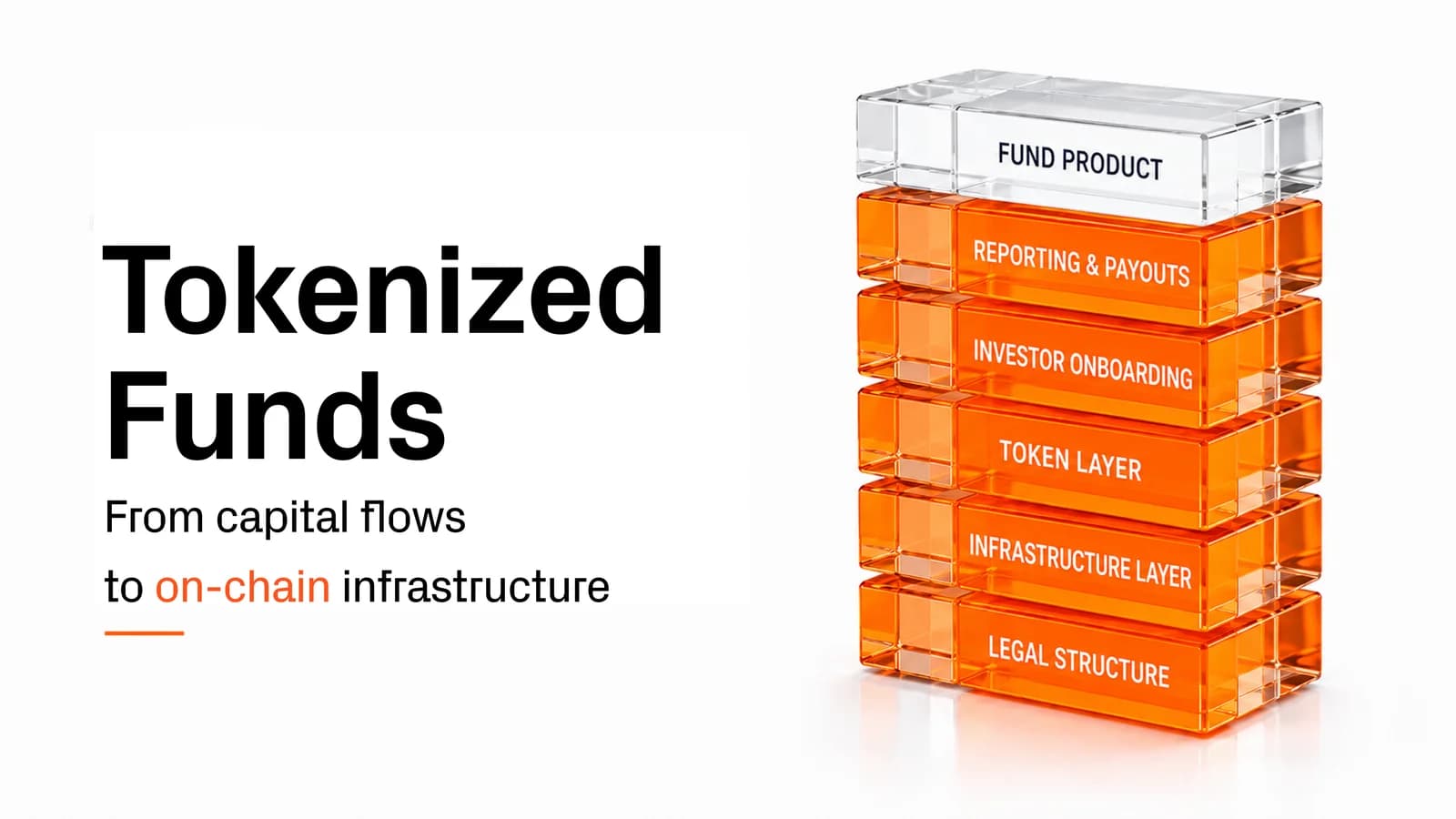
The signal for asset managers across jurisdictions is the same: the question has moved from “should we tokenize?” to “on whose infrastructure, and under whose license?” And once that answer is found, the specifics begin — structure, distribution channels, administration, compliance, and our tokenization services that have to be assembled ahead of launch.
What this means for an asset manager
There are five questions worth answering:
- Which of your products has a clear cash flow and can withstand a tokenized format?
- Where will anchor demand for the first issuance come from — before any “organic” demand appears?
- Which legal structure fits your jurisdiction: a separate class, a feeder, an SPV?
- Who owns your potential infrastructure partner — and does that partner compete with you for the same investors?
- Is your team operationally ready: onboarding, payouts, reporting in tokenized form?
The fourth question deserves special attention. Most tokenization infrastructure in Asia is owned by banking groups, exchanges, or closed consortia. For an asset manager, this means client data may live inside the perimeter of a structure that competes with you. Independence of the technology layer is not ideology. It is a negotiating position for the next ten years. That independent foundation is exactly what Sabai Protocol — a turnkey tokenization platform provides, without competing with the manager for their own investors.
Instead of a conclusion
For five years, Sabai has been building tokenization systems under clients' brands — the Sabai Property case study, Renance, Layan Verde, Layan Green Park. Based on this experience, we are now opening a tokenization infrastructure track for asset managers: under your brand, with your clients.
The first step is a free 90-minute diagnostic: an honest answer on whether your fund is ready for tokenization and what it would take to launch.