By various estimates, the market for real world asset tokenization on the blockchain (RWA) had climbed past several tens of billions of dollars by 2026. Yet almost all of that market is built for institutions writing checks in the millions — for large funds and banks, not for a company that needs to raise capital against its own business.
This is exactly where tokenization starts to mean something concrete. For the owner of an expensive but immovable asset — a property developer, an agricultural holding, an energy company, a fund manager — the problems are nearly always the same: capital is locked inside an asset that can't be sold off in pieces, a high entry check shuts out almost every investor, and raising money drags on for months through banks and intermediaries.
Tokenization hits all three at once: it splits the asset into fractions, opens access to investors writing small checks from practically any jurisdiction, automates payouts via smart contract, and moves the whole deal online. This is exactly why tokenization for business is shifting from a novelty into a working tool for raising capital.
Below is a breakdown of what assets can be tokenized to a business's benefit: seven assets where tokenization is already making money, one case where a project failed loudly, and which rights to an asset actually make sense to wrap in a token.
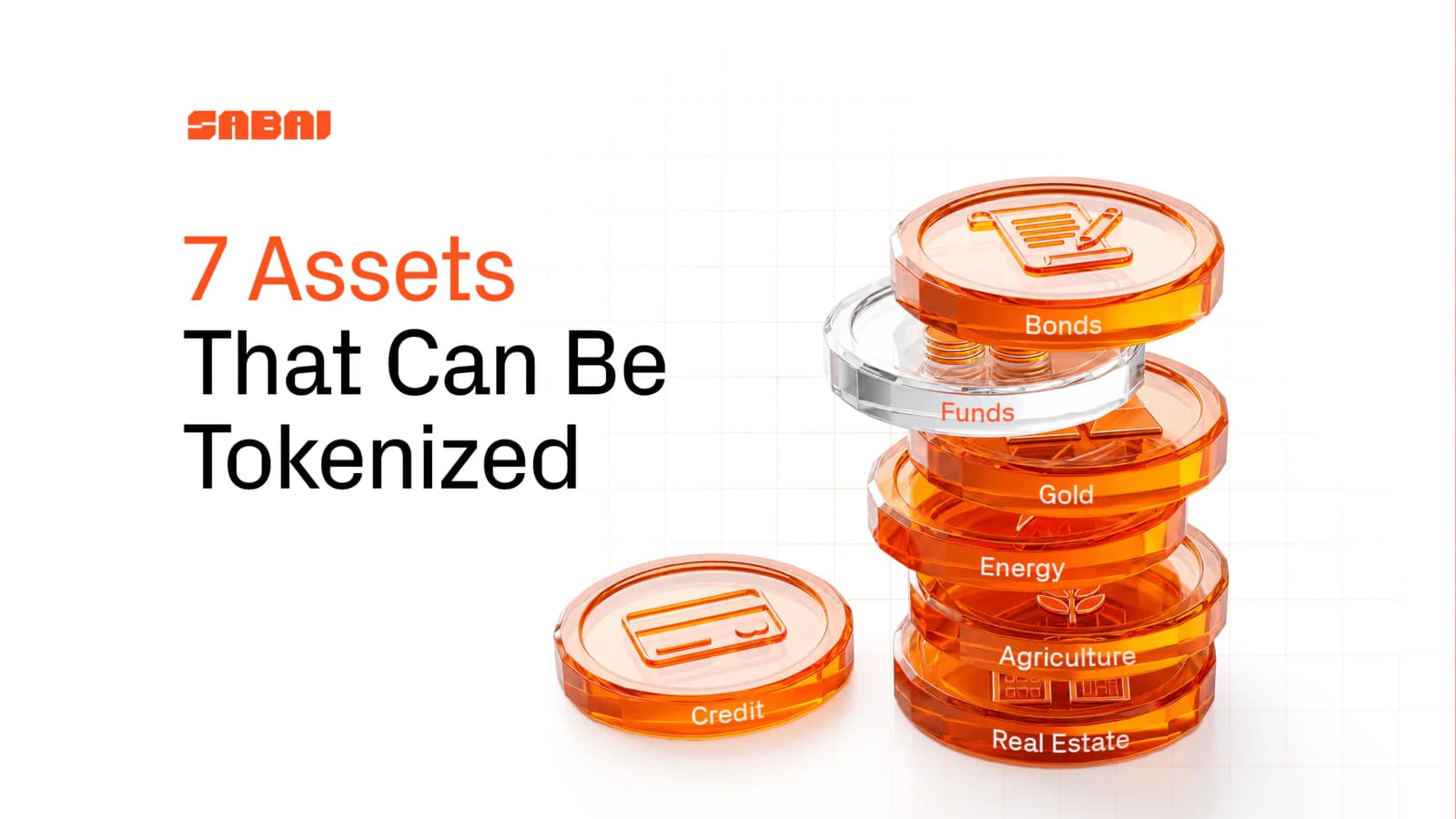
Real estate: raising capital through fractional ownership
Real estate is the most intuitive of the assets to tokenize. For a developer who wants to sell to foreign investors, everything bottlenecks on building a complex operation: you need offices in different countries, local sales teams, and cumbersome cross-border banking chains — and selling fractional shares piles mountains of paperwork on top of that, one stack per buyer. Entering a new market ends up expensive and slow.
The same challenges confronted one of Phuket's largest developers in 2020 — the development holding VillaCarte Group — and that's when its founder began thinking about tokenization. At the time there was simply no suitable off-the-shelf solution on the market, so the group launched a startup internally and built its own infrastructure and platform for selling tokenized real estate — Sabai Property.
Before issuing anything, they had to answer the central question — where does asset tokenization actually begin, and what exactly do you turn into a token? There are several options, and they are not equivalent. You can wrap a stake in the SPV that owns the property; you can wrap the right to a share of rental income without transferring ownership; or you can wrap a debt claim against the project.
The holding's projects — Layan Green Park and Layan Verde — took the equity-participation route, with guaranteed and rental payouts: an investor completed onboarding and KYC online from any country, came in with a small check, and the payouts and proceeds from a sold apartment were distributed automatically. For the developer, this became not a one-off "real estate sale" but a new digital channel for financing construction.
You can read more about how the platform was built in this article.
That the demand is real is clear from other projects too. When the Dubai Land Department launched tokenization through the PRYPCO Mint platform, the first property was snapped up in a single day by 224 investors from 44 countries, with entry starting around $540 — and roughly 70% of them were investing in Dubai real estate for the first time. These are people the classic sales model never reaches. A single state-backed pilot doesn't yet prove the market is repeatable, but as a demand signal it's telling.
Agribusiness: working capital before the harvest
A farmer can have 500 tons of soy sitting in storage, worth half a million dollars — and still have no cash. The capital is locked in the grain: selling it off in small lots is slow, and until a big deal closes the only options are an expensive loan or the swings of the currency market. It's the classic affliction of a sector with a long cycle and seasonal revenue.
Argentina's Agrotoken broke that loop. What gets tokenized here isn't land or the harvest in the abstract, but specific grain that is already in storage and verified: the farmer deposits it at an elevator, receives an electronic warehouse certificate, an accredited oracle-exporter confirms the volume — and a token is issued against each ton (1 token = 1 ton of soy, corn, or wheat).
From there, those tokens can be spent with a Visa card at tens of millions of merchants, or pledged as collateral for a loan at Santander, without waiting for the harvest to reach a buyer. An immovable asset in the silo turns into portable collateral in a phone. Since launch, the platform has grown from a thousand to tens of thousands of tons under management, and its partners have come to include Visa and the agricultural giant Bunge.
The whole structure rests on provable backing. The token is worth exactly what the verifiable ton behind it is worth; no audit and no oracle means no asset.
Oil and gas: tokenizing the cash flow from production
Oil is one of the most liquid commodities in the world and, at the same time, a closed club: without the status of a fund, a bank, or a commodity trader, getting in as an investor is nearly impossible — large lots, storage, insurance, and logistics all stand in the way. The temptation is obvious: put the barrel itself "on the blockchain" under a "1 token = 1 liter of oil" scheme.
The trouble is that for such a token to mean anything, you need five things at once: an audit of real reserves, custody of the physical oil, a price oracle, a working redemption mechanism, and a legal link between the token and the asset. Without them it isn't a commodity token at all — just a line in a whitepaper that happens to mention oil.
Venezuela showed what that temptation looks like in its purest form. In 2018 the state launched the Petro — a cryptocurrency supposedly backed by five billion barrels of oil from the Orinoco Belt deposits — and on paper it all sounded like ideal commodity tokenization.
In reality there was no independent reserve audit, no custody, and no real mechanism to exchange a token for oil or money at the stated price — the "backing" remained a promise on paper. The Petro won neither market trust nor any meaningful trading volume, fell under U.S. sanctions, and in early 2024 was quietly wound down — the balances left in wallets were simply converted into bolivars. That is the plain price of skipping those five points: a token that references oil but is anchored to nothing is, in the end, worth nothing.
The working model for an energy company looks different — you tokenize the rights and the revenue, not the commodity. That's what the U.S. firm Ziyen Energy did: it issued the ZiyenCoin security token under SEC Rule 506(c). The token represents a stake in the company's own equity, and the company in turn holds a working interest in 40 oil and gas wells in Texas; revenue from production is distributed to holders. The custody problem disappears on its own, everything is transparent to the regulator, and the investor gets a cash flow rather than a canister. The direct takeaway for business: the realistic path is tokenized percentages of sales and shares of production, not barrels in a warehouse.
If you'd like to learn more about how oil can be turned into tokens, read this detailed breakdown of five tokenization models for the oil industry.
Renewable energy: capital for mid-sized projects
Green energy has a distinct financing dead zone. Large plants are taken by banks and infrastructure funds, small rooftop installations live on grants and subsidies, and mid-sized projects (call it $1–50 million) are too small for a bank and too expensive for a grant. The owner of a project that size spends months hunting for money that simply doesn't exist in the system at that scale.
Tokenization is good at raising capital for precisely this caliber. The asset is placed into an SPV, and the investor is offered not a stake in the plant itself but a tokenized economic interest in the project — a right to a share of the income from selling electricity and "green" certificates.
The Plural Energy platform structures each deal for its own pool of investors: in one, it opened a portfolio of solar projects to retail investors for as little as $500, while another deal on the same platform stayed open only to accredited investors with a check of $50,000 and up. For the developer it's a new channel for a project the bank ignores; for the investor, access to a clean-energy cash flow that was previously locked behind a high threshold.
Gold: tokenizing the ounce and reaching the investor directly
Here an objection suggests itself: gold is already one of the most liquid assets in the world — exchanges, futures, ETFs; you can buy and sell it in a single click. True enough, but for the miner or the refinery itself that's someone else's liquidity. First, it's wholesale and intermediated: the metal moves down the chain to banks and dealers at the spot price, while intermediaries pocket the retail markup and the direct relationship with the end investor. Second, to sell to investors directly you need your own infrastructure — vault, insurance, assaying, logistics, payment processing — costs steep enough that it's simpler not to build your own channel at all.
Tokenized gold removes both problems, and here the token is as simple in substance as it gets: it represents a direct right to a specific physical ounce. PAX Gold (PAXG) and Tether Gold (XAUT) are built the same way — one token corresponds to one troy ounce of London Good Delivery gold, physically held in a certified vault, with regular audits and the ability to trace a specific bar by its serial number. From there comes everything the metal can't do: the token splits into fractions, trades around the clock, and transfers for hundredths of a percent in fees.
This stopped being a niche story long ago: the combined market cap of the two largest gold tokens runs into the billions of dollars, and their trading volume into the tens of billions per quarter. In the first three months of 2026 alone, spot turnover in tokenized gold topped $90 billion. For a dealer or a refinery, this is essentially a ready-made distribution channel and around-the-clock liquidity without owning a network of vaults.
Funds: the tokenized unit and round-the-clock settlement
A traditional fund's bottlenecks are operational: multi-day settlement, manual holder registries, distribution boxed in by a high minimum check and by geography, plus cash that perpetually sits idle. Tokenization strikes right here, wrapping the fund unit itself into a token — a share of the assets under management, to which a right to income is attached.
In March 2024, BlackRock, together with the platform Securitize, launched BUIDL — a tokenized fund of U.S. government debt. In two years it grew from zero to billions of dollars under management, became the largest of its kind, paid out a notable sum in dividends to holders, accrues income daily, and settles around the clock across several blockchains at once.
A new type of buyer emerged along the way: the fund token began to be used as collateral and as backing for stablecoins in DeFi. Even so, BUIDL remains an institutional product with entry starting in the millions of dollars — which is exactly why the retail niche, the same instrument but aimed at an investor with a small check, remains open for any manager willing to step into it.
If you're considering tokenizing a fund, read our case breakdown — who has already done it, what worked, and what didn't.
Bonds: tokenizing the debt claim
A conventional bond issue is an entire layer of intermediaries and costs: arrangers, paying agents, the central securities depository, clearing, and the familiar T+2 settlement, during which the parties carry counterparty risk. Every link costs both money and time.
Compare that with what Siemens did. In 2023 the company issued a €60 million digital bond on the Polygon blockchain. Here the debt claim itself is wrapped into a token, and investors bought it directly — no intermediary bank, no paper global certificate, no central clearing. In 2024 Siemens repeated the issue, this time at €300 million, settling in central bank money in minutes instead of two days, which all but eliminated settlement risk. The European Investment Bank, Société Générale, Santander, and UBS have gone the same way — and the list of issuers keeps growing.
For the issuing company the arithmetic is clear: the issue is cheaper, coupons are paid automatically by smart contract, and the secondary market can in principle run around the clock. And there's a layer that conversations like this usually mention less than the rest: the traditional debt market is closed to mid-sized businesses, and where a bank refuses a loan, tokenized debt gives a company direct access to investors — without having to take on the expensive infrastructure of an exchange listing.
What all seven assets have in common
Tokenized assets couldn't be more different: a building, a ton of soy, a stake in a well, a solar plant, an ounce of gold, a fund unit, a bond. Yet the benefit is one and the same — capital stops being locked: liquidity appears where there was none, access opens for investors who were previously shut out, and automation replaces paper. All that changes is the wrapper around this same mechanics.
It's worth saying honestly, though, what the other side looks like — without it the picture comes out too rosy.
First, the promised "round-the-clock liquidity" genuinely exists in far from every case: for gold tokens and funds like BUIDL the secondary market really is deep, but for tokens of real estate, solar projects, or oil shares it is most often thin — being able to trade 24/7 doesn't mean a buyer will be there at the moment you need one.
Second, and more importantly, this field has had plenty of failures, and the Petro is no exception: when there's no verifiable asset, no legal link, and no redemption mechanism behind a token, no technology will save it.
What all these tokenization use cases show together — the successful ones and the failure alike — is where the real line runs. The barrier is almost never the blockchain: technically, issuing tokens backed by real assets was mastered long ago. The stumbling happens elsewhere — on legal structure, custody, compliance, and, above all, distribution. A token without a prepared asset, a coherent legal wrapper, and a sales channel isn't a strategy — it's just a faster way to discover that there's no deal.
So the right first step isn't a token but a sober assessment of the asset itself. Book a free business diagnostic, and in 90 minutes the Sabai team will work through your asset, your legal model, and your goal, and show you which tokenization path will actually work in your case — and whether it will work at all.